
REVIEW · MADINAH
From Madinah: Half-Day Ziarah Tour
A sacred day trip in four hours. You get Uhud Mountain and the Qibla change story in one compact route, moving from key battle sites to the mosques where the events left a mark.
I like that the tour runs with a tight sequence, so the timeline feels logical instead of random. I also love the audio guiding options, which let you follow along even when you want to pause and look at details up close.
One possible drawback is pacing. With only about four hours total, some stops may feel brief if you want a long prayer, quiet reflection, or slow photo time at each location.
In This Review
- Quick hits before you go
- Starting in Madinah: smooth pickup and a realistic four-hour plan
- Uhud Mountain and Hamza ibn Abdulmuttalib (RA): the battle site that you can feel
- Masjid al-Qiblatayn: where the Qibla change from Al Quds to Makkah becomes real
- Quba Mosque: the first mosque in Islam and the Zuhr prayer window
- The Seven Mosques of the trench: following the defensive line on Mount Sela
- Audio guiding and the human touch: how to make the most of the narration
- Transportation and entrance fees: why the “small group day” value can add up
- What to bring for comfort: sun hat, sports shoes, and light baggage
- Who this tour suits best, and who should skip it
- Should you book this Madinah ziarah tour?
- FAQ
- How long is the Madinah half-day ziarah tour?
- What sites does the tour visit?
- Is pickup and return transfer included?
- What is included in the tour price?
- What languages are available for audio guiding?
- Is there a live guide?
- Are food and beverages included?
- What should I bring?
- What is not allowed during the tour?
- Who should not take this tour?
Quick hits before you go
- Uhud Mountain first: you start where the Battle of Uhud took place, including the martyr sites tied to Hamza ibn Abdulmuttalib (RA).
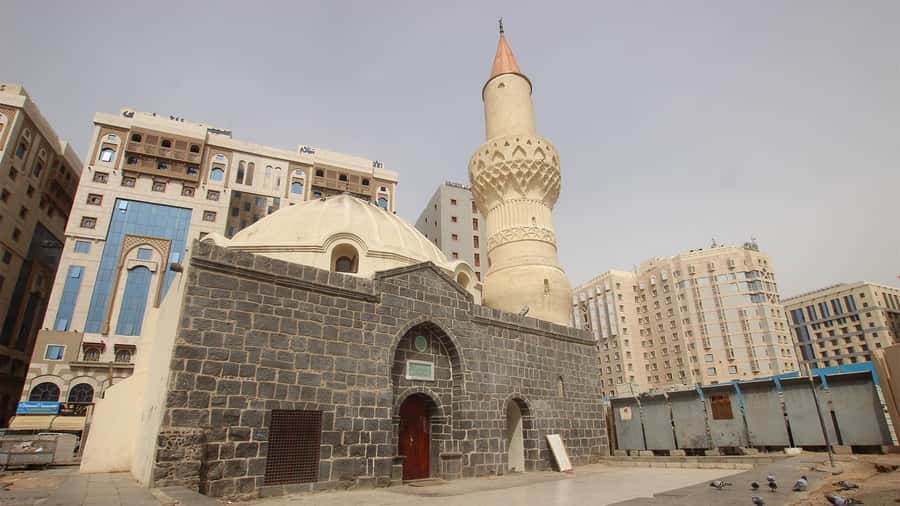
- Masjid al-Qiblatayn focus: you visit the mosque connected to the command to change the Qibla from Al Quds to Makkah.
- Quba Mosque timing: you include Quba, often paired with the chance to attend Zuhr prayer if time allows.
- Seven Mosques of the trench: you see the line of mosques connected to the defensive digging and troop positions in 627 CE.
- Multilingual audio: choose from a long list of languages, so you are not stuck if your group speaks different ones.
- Return transfer included: you get a straightforward start and finish, pickup and drop-off handled for you.
Starting in Madinah: smooth pickup and a realistic four-hour plan
This is a half-day ziarah tour built for people who want structure. Pickup is included from any city hotel in Madinah, and you return to your hotel at the end, so you are not negotiating taxis between sites that can feel far apart when you are on your own.
The duration is 4 hours, which is long enough to hit four major stops, but short enough that you should keep your expectations grounded. Think “walk, learn, notice,” not “linger for hours at every mosque.” If you do better with a schedule and moving between locations with context, this format works.
Practical note: the tour does not include food and beverages, so plan on handling water on your own and eating before or after. Also bring a sun hat and sports shoes, since you will be outside between stops.
More Madinah visits taking in the historic sites of the city
- Medina Unveiled Private Tour★ 5.0 · 100 reviews
- Madinah Culture & History Tour – Led by Local Guide★ 5.0 · 74 reviews
- From Madinah: Half-Day Ziarah Tour★ 4.9 · 59 reviews
- City Sightseeing Al Madinah Hop-On Hop-Off Bus Tour★ 3.0 · 50 reviews
- 4WD Adventure in Uhud Mountain★ 4.5 · 29 reviews
Uhud Mountain and Hamza ibn Abdulmuttalib (RA): the battle site that you can feel
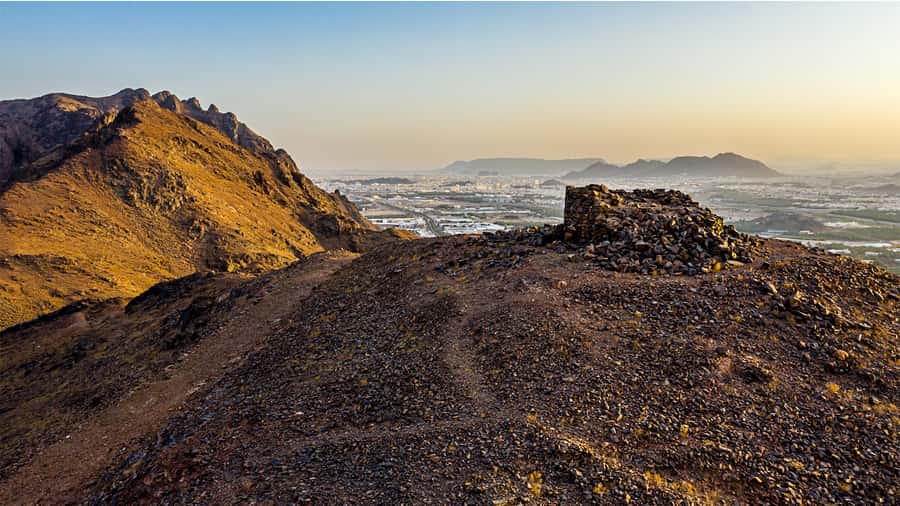
Uhud Mountain is the kind of place that turns history into something physical. The mountain gets its name because it stands apart from the surrounding peaks, and that separation matters when you are trying to understand why this area became a key setting for events.
At the foot of Uhud took place the Battle of Uhud, one of the major turning points in early Islamic history. The tour connects the place directly to sacrifice, including the martyrdom of seventy companions, among them Hamza ibn Abdulmuttalib (RA), often called the Master of Martyrs.
What I like about starting here is that it gives you an emotional anchor before you shift into the mosque stops. You are not only learning names and dates. You are seeing a site where courage and loss are part of the geography. When you later visit the mosques tied to guidance and defense, it all feels connected instead of like separate trivia.
Possible downside: it is an outdoor start. If you are sensitive to heat or sun, a hat and comfortable shoes matter more than you might think. Also, move at a calm pace and save your long questions for moments where you are not blocking others.
Masjid al-Qiblatayn: where the Qibla change from Al Quds to Makkah becomes real
Next up is Masjid al-Qiblatayn, the Holy Mosque linked to the moment Prophet (SAW) received the command to change the Qibla direction from Al Quds to Makkah.
This stop is powerful because the meaning is concrete. You are not just hearing about a change in direction in the abstract. You are standing in the place connected to that command, so it lands differently. Even if you already know the story, the mosque setting helps you remember that worship choices were guided, not guessed.
For planning, expect a respectful mosque visit: careful clothing and quiet behavior, with time set aside for looking and absorbing. If you are the type who likes to understand the “why” before worship, this stop fits you well, because it naturally leads to reflection about guidance, community, and identity.
Small practical tip: keep your phone ready for photos you genuinely care about, but do not rush. The value here is your awareness as you move through the space, not the number of pictures you get.
Quba Mosque: the first mosque in Islam and the Zuhr prayer window
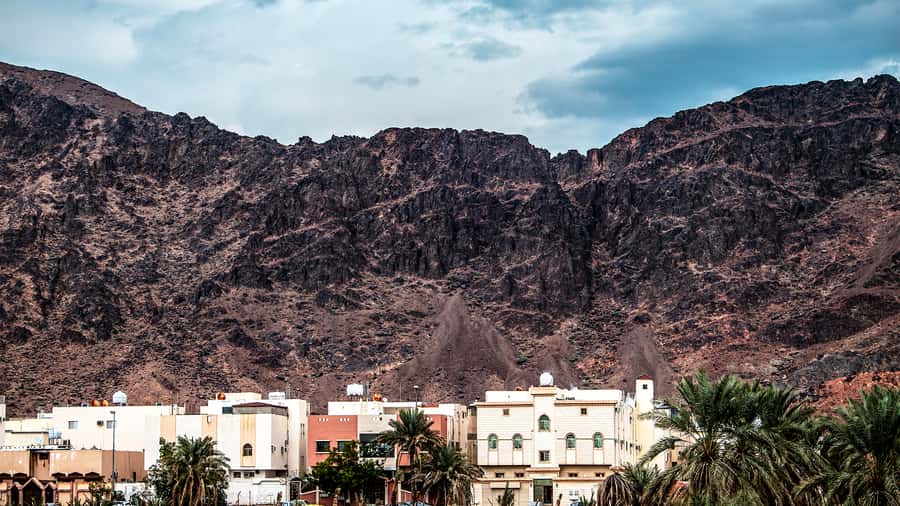
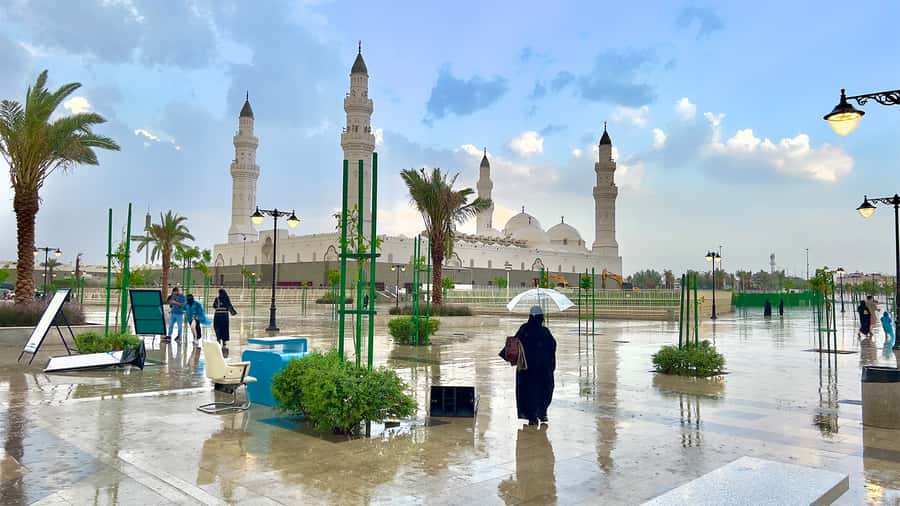
Then you go to Quba Mosque, described as the first mosque in Islam, dating to the lifetime of the Prophet. The tour framing emphasizes that the Prophet (SAW) himself positioned the first stones after his migration from Makkah to Madinah. That detail matters because it turns Quba into more than an old building. It becomes a living link to the early community’s beginnings.
If time permits, you may be able to attend Zuhr prayer. This is one of those “best case” elements you should appreciate without relying on. Prayer timing depends on the flow of the day and how quickly the group moves between stops.
How to use this stop well: treat it like a reset. After Uhud, you shift from sacrifice and defense into foundation and worship. If your group is talkative, you might still appreciate the quieter part of Quba, where you can stand, breathe, and take in the sense of continuity.
Also remember the tour is half-day. If prayer is important to you, keep an eye on time and be ready to move quickly when the group needs to depart.
The Seven Mosques of the trench: following the defensive line on Mount Sela
Finally, you visit the Seven Mosques (al-Masajid as-Sab’a) tied to the Battle of the Trench. This part connects the route to a very specific defensive effort: when Muslims dug the trench to protect Madinah, in 627 CE, during the Quraysh campaign with allied tribes in the fifth year of Hijra.
The mosques are on the western side of Mount Sela’, and the key idea is that they are built on known sites connected to troop stations and monitoring positions. In other words, each mosque marks a role people played during the defense.
You will see a row of mosques from north to south, including al-Fathah, Salman Farsi, Abu Bakr, Umar ibn Khattab, Ali ibn Abi Talib, and Fatima. The tour also highlights that each mosque’s name links to the conquest story, with al-Fathah tied to the dome location (Qubba) of the Prophet.
What makes this stop more than a list is the way it helps you visualize the battle plan. If you tend to learn best with geography, this is your moment. You can stand there and imagine how a line of watchers and defenders would change what the Quraysh faced.
Possible drawback: the line is a series of separate sites, so attention can drift if the group is tired. Bring focus by asking one good question early, and keep your notes or mental list of what each mosque is connected to. That turns walking between locations into understanding.
- 4WD Adventure in Uhud Mountain
★ 4.5 · 29 reviews - Madinah Ziyarats (Private tour)
★ 3.5 · 26 reviews - 1 Hour Private Horse Riding in Madinah
★ 4.0 · 5 reviews - Prophet Biography Tour of Madinah
★ 4.6 · 5 reviews
Audio guiding and the human touch: how to make the most of the narration
This tour includes an audio guide plus a driver escort, and you also get a live tour guide who is listed as English and Arabic. Audio guiding is offered in a long set of languages, including English, Arabic, Spanish, Italian, French, German, Russian, Turkish, Chinese, Malay, Indonesian, Hindi, Urdu.
That multilingual mix is a real quality-of-life feature, especially for mixed-language groups. You are not stuck waiting for the slowest person. You can also dial your attention up or down, depending on what you feel like absorbing in that moment.
The standout element from real-world experiences with this tour is the guide style. A guide named Talha is repeatedly praised for giving clear explanations ahead of each site, keeping things structured, and not rushing people through. The best part of that approach is simple: you know what you are looking at before you step into the space.
Also, there is a practical support vibe. In at least one instance, the same guide was described as helping with challenges during the broader journey to Makkah, with fast communication via WhatsApp. That does not mean every trip will unfold the same way, but it tells you that the people running the experience tend to take responsibility beyond just seat time in the car.
My advice: choose your audio language carefully, and do not treat it like background noise. Use it to catch the story beats, then let your attention shift to what you can see and feel at each location.
Transportation and entrance fees: why the “small group day” value can add up
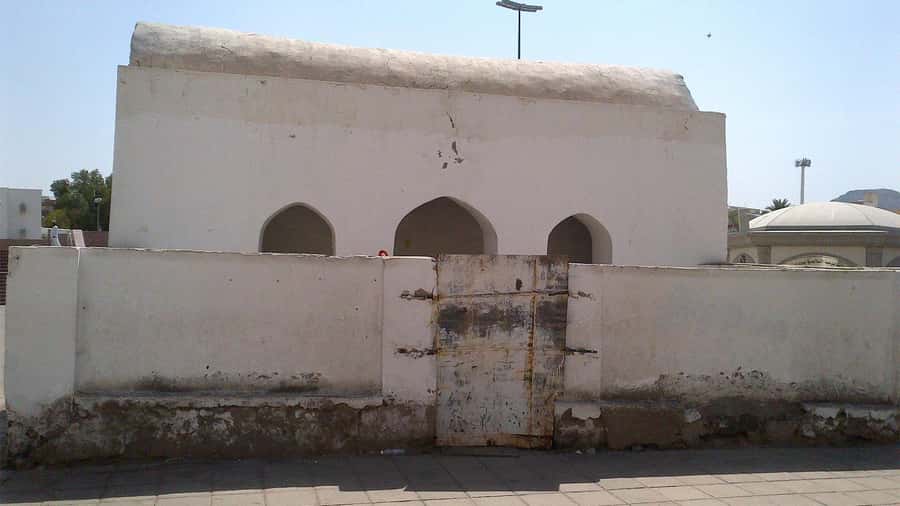
You are paying for the logistics plus the guided learning. Included in the price are transportation, a driver escort, and entrance fees. Pickup and return transfer are included too, so you are not paying extra to get between Uhud, Quba, and the trench sites.
Food and beverages are not included, so you should plan for that. But the rest is designed to reduce friction. On your own, even getting to all these places can become a chain of separate decisions: transport, entry costs, timing, and navigation.
Is $28 per person reasonable? For a half-day with transportation, entrances, and audio in many languages, it can be strong value, especially if you would otherwise spend time arranging multiple rides or missing a stop because you misread timing. The biggest “hidden cost” is personal: if you are the type who really needs lots of time at each mosque, you may want to pair this with another visit day so you can return and linger.
What to bring for comfort: sun hat, sports shoes, and light baggage
The tour’s packing list is short, and that is helpful. Bring:
- Sun hat
- Sports shoes
Not allowed:
- Luggage or large bags
- Alcohol and drugs
That luggage rule is worth taking seriously. If you like to travel light but with a backpack, make it compact. You want to avoid stress when you are moving between a car and walking paths at sacred sites.
If you plan to carry water, do it in a manageable way. Keep your hands free when you are walking and when you need to show respect in mosque areas.
Who this tour suits best, and who should skip it
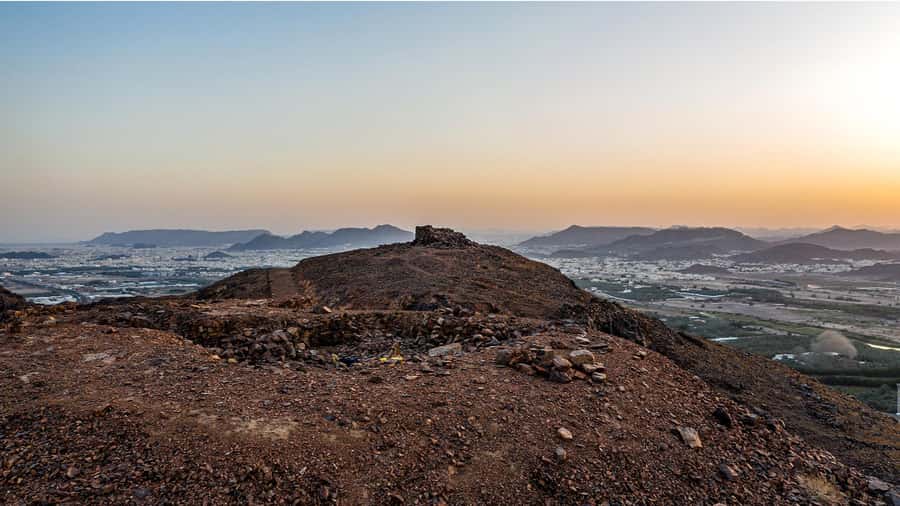
This works best for people who want spiritual and historical exploration in a single session. It is especially good if you like a route that moves from early sacrifice to worship foundations to defense strategies.
It may not be a good fit if you:
- are pregnant
- use a wheelchair
- have altitude sickness
That is not a judgement call, it is just realistic logistics and comfort. If any of those apply, consider a different pace or a different format designed around mobility.
Also, if you love unhurried time, treat the four-hour schedule as a guideline, not a promise of long stays everywhere. The trip is structured so you can cover key places, not so you can disappear into one site for half the day.
Should you book this Madinah ziarah tour?
Book it if you want a clear, efficient route that hits Uhud Mountain, Masjid al-Qiblatayn, Quba Mosque, and the Seven Mosques of the trench without the headache of planning every transfer. At $28, the value is strongest when you appreciate guided context plus multilingual audio plus included transportation and entrances.
Skip it or plan a different approach if your priority is long, slow stays, or if mobility constraints might make a half-day schedule uncomfortable. Also, since food is not included, make sure you are not hangry or under-hydrated, because you will want your attention for the stories tied to each place.
If you do book, my best tip is simple: go in ready to learn the “why” before you step through the next doorway. This tour is built for that rhythm, and it makes the four hours feel full instead of rushed.
FAQ
How long is the Madinah half-day ziarah tour?
The tour lasts about 4 hours.
What sites does the tour visit?
It visits Uhud Mountain, Masjid al-Qiblatayn, Quba Mosque, and the Seven Mosques tied to the Battle of the Trench.
Is pickup and return transfer included?
Yes. Pickup is included from any city hotels of Medina, and you also return to your hotel.
What is included in the tour price?
Included are transportation, a driver escort, entrance fees, and audio guiding. Audio guiding is available in multiple languages.
What languages are available for audio guiding?
Audio guiding is listed in English, Arabic, Chinese, French, German, Russian, Turkish, Chinese, Malay, Indonesian, Hindi, Italian, Spanish, Urdu.
Is there a live guide?
Yes. The live tour guide is listed as English and Arabic.
Are food and beverages included?
No. Food and beverages are not included.
What should I bring?
You should bring a sun hat and sports shoes.
What is not allowed during the tour?
Luggage or large bags are not allowed. Alcohol and drugs are also not allowed.
Who should not take this tour?
It is not suitable for pregnant women, wheelchair users, and people with altitude sickness.
More Saudi Arabia Tours
More Saudi Tours We Have Reviewed
Madinah and Its Historic Sites
Booked more recently: other tours across Saudi Arabia
More in Madinah Ziyarah & Heritage Sites.
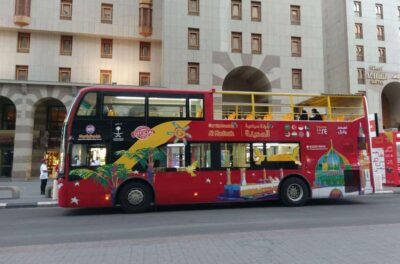 ★ 3.9City Sightseeing Hop-On Hop-Off Bus TourFrom $22148 reviews
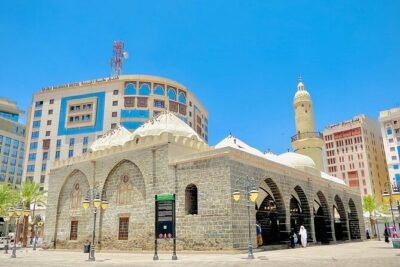 ★ 5.0Medina Unveiled Private TourFrom $160100 reviews
 ★ 5.0Madinah Culture & History Tour – Led by Local GuideFrom $13674 reviews
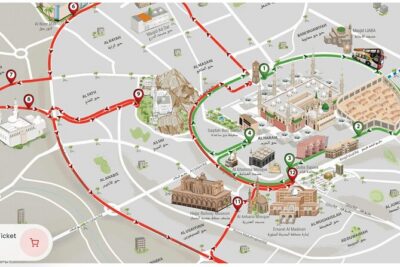 ★ 3.0City Sightseeing Al Madinah Hop-On Hop-Off Bus TourFrom $2250 reviews
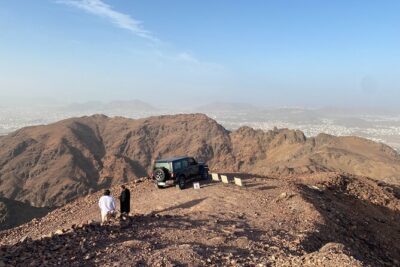 ★ 4.54WD Adventure in Uhud MountainFrom $7029 reviews
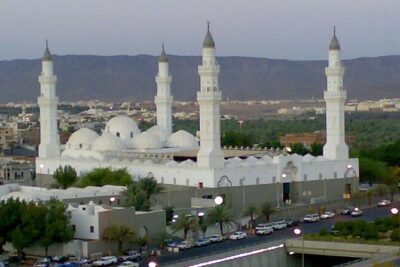 ★ 3.5Madinah Ziyarats (Private tour)From $9226 reviews
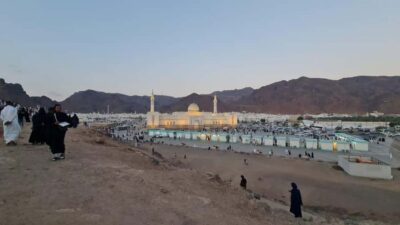 ★ 5.0Madina: Guided Tour of the City’s Historical SightsFrom $9915 reviews
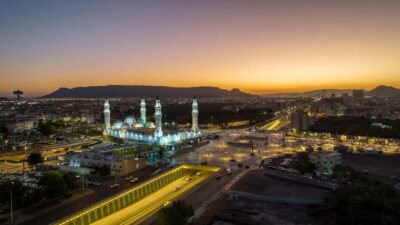 ★ 4.6Prophet Biography Tour of MadinahFrom $2505 reviews
Also listed in