
REVIEW · THE WADIS
Walk In Moses’ Footsteps – Tour between Tabuk and The Red Sea
Moses’ route, drawn on Saudi stone. This 3-day private tour between Tabuk and the Red Sea strings together Haql (the crossing point), desert valleys tied to the Exodus, and the Jabal al-Lawz and Jebel Maqla area, where local Bedouin beliefs and ongoing research try to match biblical place names to real terrain.
What I like most is how the day-by-day plan forces you to see connections, not just read them. You get long enough time at the Red Sea view point and the oasis valley to actually slow down, look at the rock formations, and understand why these places matter to people who live nearby. I also like that food is handled, with 2 breakfasts, 3 lunches, and 2 dinners included, so you are not hunting for meals after a long drive and walks.
One drawback to factor in: this is a remote, outdoor route that depends on good weather, and it involves climbing (plus steep optional add-ons). If you are traveling in hotter months, plan for heat, and if you want the Elijah’s cave or Jebel Maqla summit extension, you need real stamina.
In This Review
- Key things to know before you go
- Why Tabuk’s Exodus trail feels more real than a standard tour
- Price and logistics: what $5,740 per group really buys you
- Day 1: Haql Red Sea crossing views, then Wadi Tayyib Al Ism like a real oasis break
- Day 2: Madyan’s Jethro links, then the Split Rock of Horeb climb
- Day 3: Jabal al-Lawz and Maqla altars, plus the big optional Elijah and summit climbs
- Guides make or break this kind of trip, and names matter here
- Best season, heat reality, and how to pack for climbs and viewpoints
- The spiritual and historical angle, without losing the travel part
- Should you book Walk In Moses’ Footsteps (Tabuk to the Red Sea)?
- FAQ
- How long is the Walk In Moses’ Footsteps tour?
- What is the price and group size?
- Where is the meeting point and what time does it start?
- Is this a private tour?
- What meals are included?
- What cancellation options do I have if plans change?
- Is there a fitness requirement, especially for optional climbs?
Key things to know before you go
- A private 3-day “Exodus route” between Tabuk and the Red Sea with time built in at key sites
- Haql and the Red Sea stop where you also get big beach views, not just a quick photo moment
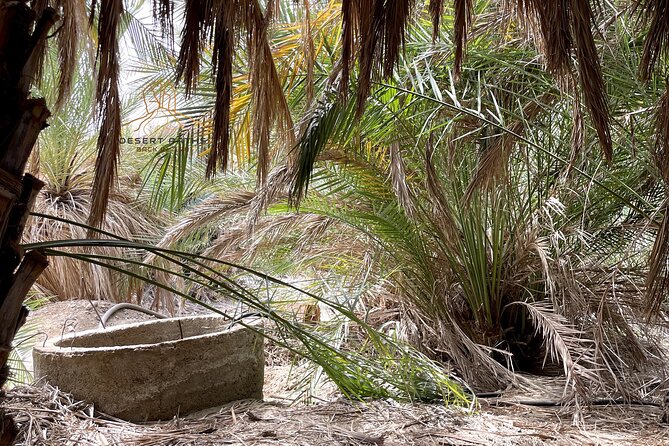
- Wadi Tayyib Al Ism (Elim Oasis) with preserved wells, date palms, and clear water pools
- Split Rock of Horeb plus nearby petroglyphs on black stones
- Jabal al-Lawz and Maqla visits that include altars tied to the Exodus story, plus optional climbs
- Guides you can ask anything to, including Abdelaziz, Gabriel, Mamdu, Abdo, and Mshali (names shared in the experience feedback)
Why Tabuk’s Exodus trail feels more real than a standard tour
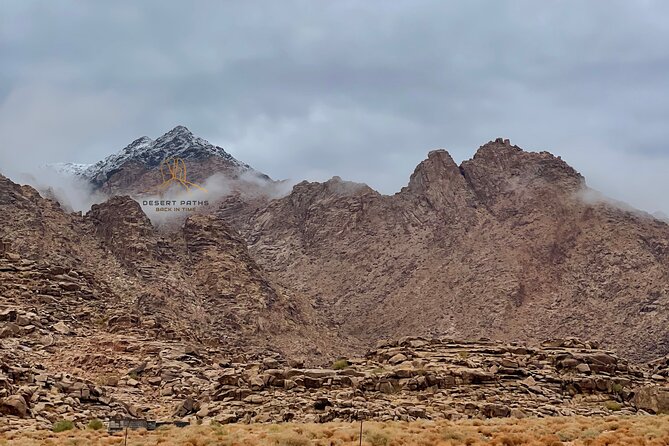
A lot of places across the Middle East claim to be Mount Sinai or Mount Horeb. What makes this route different is that it leans heavily on a specific Saudi region, Jebal Maqla and its surroundings, and then takes you site by site to explain why those match the story. You are not just handed a list, you are shown locations and the logic behind them, plus what local Bedouin communities believe about the area.
The best part is that this is not a “drive-by and vanish” itinerary. Day 1 alone gives you a Red Sea crossing point moment at Haql, then shifts you into a canyon oasis valley at Wadi Tayyib Al Ism, where preserved wells still support local herding. That change in scenery is not random. It helps your brain understand what the Exodus route might have felt like: open sea views, then scarcity, then water and shade.
Still, keep expectations grounded. The biblical-place matching here is a researched theory and local tradition, not a universally settled fact. If you love travel where faith and geography overlap, this is a strong fit. If you only want locations with total agreement, you might find it too interpretive.
Price and logistics: what $5,740 per group really buys you
This is priced at $5,740 per group for up to 4 people, for about 3 days. That can sound steep until you do the math and think like a traveler: you are paying for a private, multi-stop desert-and-oasis route, with meals included and a guide staying with your group the whole time.
For a full group of four, you can think of it as roughly $1,435 per person. For two people, it is closer to $2,870 per person. In other words, the value jumps when you travel in a small group of friends or family who want the same style of trip.
Operationally, you get two useful things:
- Pickup and transport support (including airport pickup from Tabuk)
- A mobile ticket for the experience
You also start early. The tour begins at 7:00 am, and the meeting point is the Hilton Garden Inn Tabuk on Prince Sultan Road. The private setup matters because it lets the guide pace the route around your group, not around a big bus schedule.
Day 1: Haql Red Sea crossing views, then Wadi Tayyib Al Ism like a real oasis break
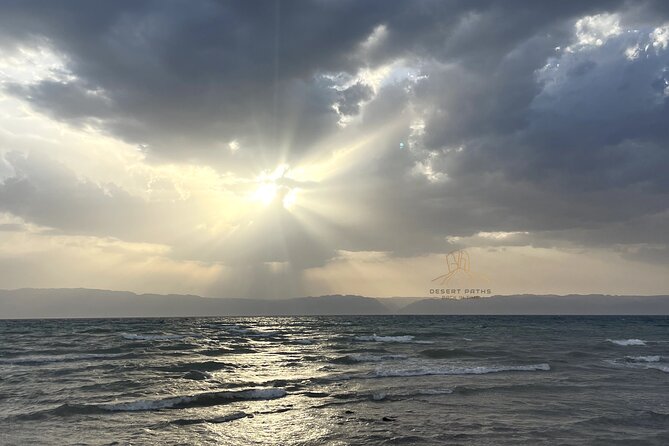
Day 1 starts with pickup from Tabuk Airport. It is a short transfer window, then you move to Haql, described as a Red Sea crossing point on the Saudi side, opposite Nuwaiba Beach. You get about 3 hours here. Yes, you will see the historical significance the tour is built on, but you also get something practical: time to stand, look, and take in the coastline and the water. The beach setting is part of the point. It helps you imagine scale, distances, and what a shoreline crossing would have looked like without modern landmarks.
What to watch for at Haql is simple: heat and sun. You will likely want sun protection and comfortable walking shoes because you are spending time outside. Also, plan your photos early. Once you are back in motion toward the next stop, you will not want to rush.
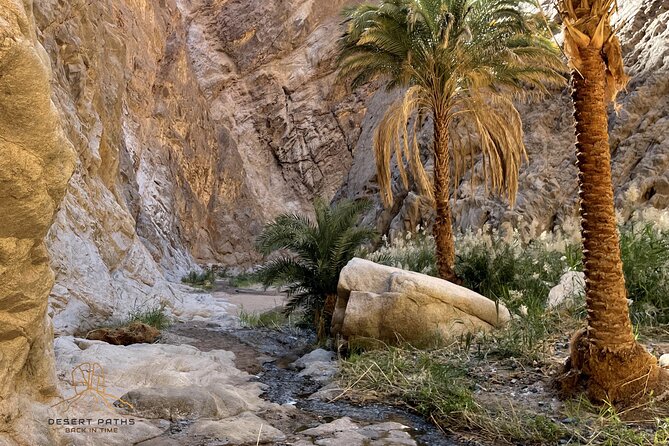
Then the day turns into Wadi Tayyib Al Ism, known as the Elim Oasis where Moses’ group camped after leaving Mara. You get about 4 hours in this valley. This is one of the itinerary highlights because the place sounds like it was designed for slow travel: towering rock formations, lush greenery, and clear blue water pools, with date palms and several wells preserved for local Bedouins to water their animals.
If you like authentic travel moments, this is where the trip becomes more than a script. Seeing preserved wells in use, and hearing what local Bedouin communities believe about the valley’s importance, gives the sites weight beyond the Bible connection.
Day 2: Madyan’s Jethro links, then the Split Rock of Horeb climb
Day 2 begins in Madyan (also called Al Bad’ locally). The tour time here is about 3 hours, and it is set up around Jethro’s Tombs, a cave complex compared in spirit to major carved-site regions like Petra or Mada’ain Saleh. One of the caves is believed to be Jethro’s tomb.
The route also connects Madyan to a well story. In the same town you can visit a well believed to be where Moses helped Jethro’s daughters by drawing water for their sheep. The tour also links this area to meeting Moses’ future wife, Sephora. Even if you do not take every identification as settled fact, these stop choices are still valuable because they show how local place traditions are built around everyday resources, especially water access.
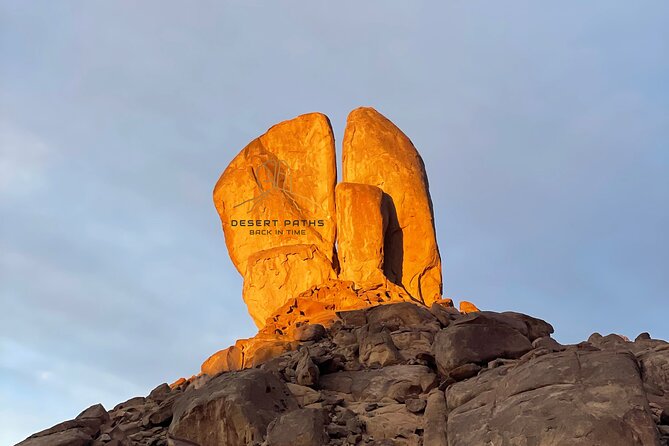
Next you head to the Split Rock of Horeb in the Rephidum area. Here you spend about 2 hours, including time to climb up to the rock. The story told on site is that God told Moses to strike the rock and water would come out to quench the people’s thirst. That message is part of why this stop is placed after Madyan and after the oasis valley of Day 1. The tour is basically walking you through the water theme, then placing you at a rock feature where the story ties water to need.
A short drive later, you get something very “on the ground” as well: ancient petroglyphs carved on black stones on top of a hill. The tour suggests this could be the hill where Moses stood with his hands up while Joshua fought the Amalekites. Whether or not every reader agrees, petroglyphs give you a direct link to human presence, and the timing in the route makes the viewpoint idea feel more plausible.
Day 3: Jabal al-Lawz and Maqla altars, plus the big optional Elijah and summit climbs
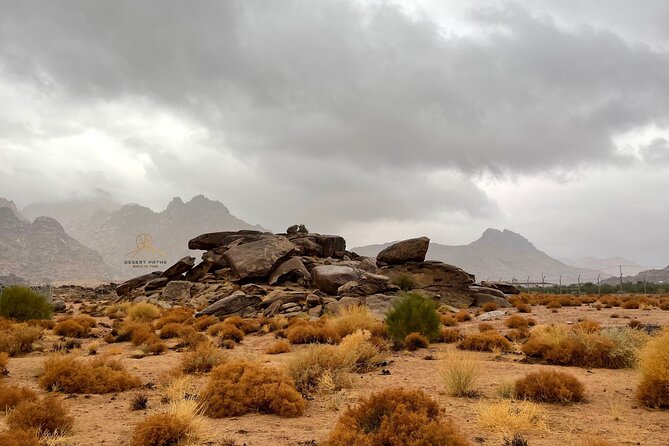
Day 3 is the mountain day, and the itinerary keeps you busy around Jabal al-Lawz and nearby peaks, including Al Lawz and Maqla. Your first mountain-area block is about 3 hours, visiting multiple story-linked points.
You start with the area believed to be where Moses and his people camped, then an altar made of rocks that were not chiseled. The tour also includes remaining columns of the 12 pillars Moses erected before one of his climbs to the summit.
Then you move to a pile of giant stones arranged as if placed purposely, with drawings carved on them showing bulls, people, and other animals. The tour connects this to the altar Aaron built in front of the golden calf event. After that, the route drives you to an ancient graveyard believed to be connected to the punishment of about 3,000 people after golden-calf worship.
Next comes another block at the mountain base. You get about 2 hours to see the Golden Calf altar, once topped with a golden calf structure that was later burned to ashes. Afterward, you visit a nearby site with a second altar and stone pillars, with only a few pieces left of the initial 12 marble pillars. The tour frames this as preparation before Moses’ climb to receive instructions tied to building the Tabernacle.
Now for the choices that can make this trip feel like a lifetime. There are optional extensions that can add time:
- Elijah’s cave extension: about 5 hours, not included in admission, advised only for fit travelers
- Jebel Maqla summit extension: about 10 hours, not included, also advised only for fit travelers
The standard tour returns you back to the meeting point. If you choose one or both extensions, the guide can arrange it, and you are trading comfort for a stronger “I was there” perspective on the Exodus and the Elijah connection.
Guides make or break this kind of trip, and names matter here
A tour like this lives or dies by the guide’s ability to turn “places” into “meaning.” Here, the guide feedback is consistently warm and specific. People mention guides such as Abdelaziz and Gabriel, plus team members like Mamdu and a Saudi partner named Abdo. Another guide name that comes through is Mshali.
What you should look for in how they run the days is not just reciting facts. The better guides will:
- answer questions as you stand at sites
- connect story beats to what you can actually see
- keep the group friendly and moving at a desert pace
One practical perk of having guides with strong local ties is comfort. In this region, hospitality and logistics matter. When the route includes climbs and long drives, a calm team helps you conserve energy and keep a positive rhythm instead of getting stressed about timing.
Best season, heat reality, and how to pack for climbs and viewpoints
You cannot treat this as a casual stroll. The tour calls for moderate physical fitness, and it explicitly raises the bar for optional climbing. That means you should pack with movement in mind: sturdy shoes for rock and uneven ground, sun protection for exposed spots, and water planning based on your own needs.
Season matters too. The experience feedback includes a clear signal that June can be too hot, so I would treat summer like a risk factor rather than a neutral choice. If you are aiming for the most comfortable weather, many people gravitate to milder months. Also note that the experience requires good weather, so if conditions are poor, the tour may be canceled and you will be offered another date or a full refund.
One more reality check: timing at mountain sites and oases can be longer than you expect because you will want time for photos and for watching how the light changes on stone and carvings. The itinerary gives set blocks, but your best moments often come when you slow down inside those blocks.
The spiritual and historical angle, without losing the travel part
This tour is built around a mix of biblical narration, local Bedouin beliefs, and conclusions drawn from ongoing research in the region. That mix can be inspiring if you like travel that connects text to terrain.
But it is worth keeping a balanced mindset. You are not receiving “proof” in a lab sense. You are getting a guided argument plus place traditions. The best way to enjoy it is to treat it like field investigation plus story travel. Ask questions. Compare what you see at each stop to what the guide is pointing out, especially around water sources, rock features, and hilltop viewpoints.
The route’s theme is consistent: water and survival. From Haql to Wadi Tayyib Al Ism, then to Madyan’s well connections, then to the rock at Horeb, and finally to the mountain altars at Jabal al-Lawz, you keep circling back to what people needed day after day.
If your idea of a great trip is to stand where the story might have happened and then talk through it with a human guide, this works very well.
Should you book Walk In Moses’ Footsteps (Tabuk to the Red Sea)?
Book it if you want a private desert-to-sea adventure with real time at sites, not quick checkmarks. It is a strong match for outdoor-minded travelers who can handle moderate fitness, and especially for small groups that can split the cost of a private tour.
I would also say yes if you care about place-based storytelling. The guide team here is repeatedly praised for bringing these locations to life, and the variety of settings, Red Sea coast to preserved wells to mountain altars, is exactly what makes this route memorable.
Skip or reconsider if you are looking for fully accessible, low-walking sightseeing, or if you are only interested in locations with total scholarly consensus. Also, if you want the Elijah’s cave or Jebel Maqla summit extension, be honest about your fitness level and your heat tolerance.
FAQ
How long is the Walk In Moses’ Footsteps tour?
It runs for about 3 days.
What is the price and group size?
The price is $5,740.00 per group, for up to 4 people.
Where is the meeting point and what time does it start?
It starts at Hilton Garden Inn Tabuk, 7701 Prince Sultan Road, السلام، تبوك 47311, Saudi Arabia, with a start time of 7:00 am.
Is this a private tour?
Yes, it is a private tour/activity, and only your group participates.
What meals are included?
You get 2 breakfasts, 3 lunches, and 2 dinners included.
What cancellation options do I have if plans change?
You can cancel for a full refund up to 24 hours in advance. If you cancel less than 24 hours before the start time, the amount paid is not refunded.
Is there a fitness requirement, especially for optional climbs?
The tour is for travelers with moderate physical fitness. If you choose extensions like Elijah’s cave or the summit of Jebel Maqla, the tour notes that you should have strong physical fitness.
More in Wadi Trails & Mountain Hikes.
 ★ 4.5From Riyadh: Tuwaiq Mountains and Najd Plateau Day TripFrom $12044 reviews
 ★ 5.0Wadi Disah Adventure from Tabuk | Al UlaFrom $40018 reviews
 ★ 4.0Journey Through Time HikeFrom $805 reviews
 ★ 4.1Wadi Al Disah TourFrom $6005 reviews
 ★ 5.0Sawda Mountains Hiking TrailFrom $994 reviews
Also listed in